
Kimchi
Korea's foundational ferment: napa cabbage salted, rinsed and buried in a garlicky, gingery chile paste, fermented until tangy, bright and alive with crunch.
The whole recipe in 60 seconds
Kimchi, in 5 ideas
- Kimchi is a method with a thousand regional faces. This is the classic Seoul-style baechu kimchi most of the world fell for.
- Salting is a cure, not a seasoning pass. The cabbage must wilt to a bendy ribbon that does not snap before it meets the paste.
- Gochugaru is irreplaceable. Its bright, fruity heat is the flavor, and no other chile powder behaves the same in the ferment.
- A sweet rice flour porridge is the paste's body and the bacteria's first meal. It is why good kimchi ferments evenly.
- Taste on day three, day seven, day fourteen. The same jar is a different food at each stage, and sour kimchi is cooking gold.
What you need
Ingredients
- 1 large napa cabbage, about 3 lb
- 1/4 cup fine sea salt, plus more as needed
- 1 cup water
- 2 tbsp sweet rice flour
- 1 tbsp sugar
- 1/2 cup gochugaru (Korean chile flakes)
- 1/4 cup fish sauce
- 6 garlic cloves, grated
- 1 tbsp grated ginger
- 1 small Korean radish or daikon, julienned
- 4 green onions, cut in 1 inch pieces
How to make it
Method
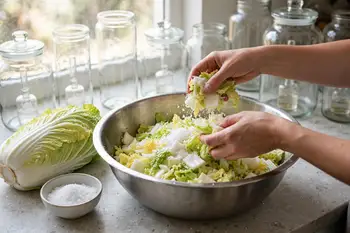 Quarter the cabbage lengthwise and cut into 2 inch pieces. Toss with the salt and leave for 2 hours, turning every 30 minutes, until the thick white parts bend without snapping.
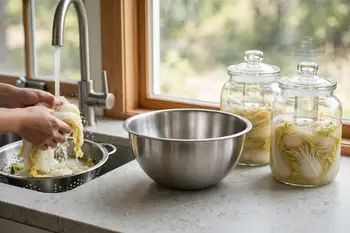 Rinse the cabbage three times and drain very well, squeezing gently.
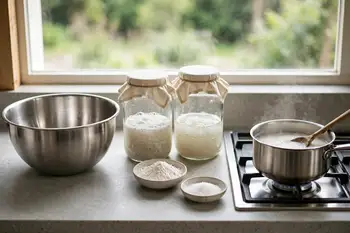 Simmer the water, rice flour and sugar for 2 minutes into a thin porridge. Cool completely.
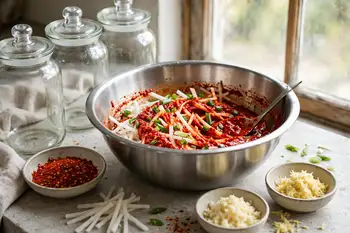 Stir the gochugaru, fish sauce, garlic and ginger into the porridge to make the paste. Fold in the radish and green onions.
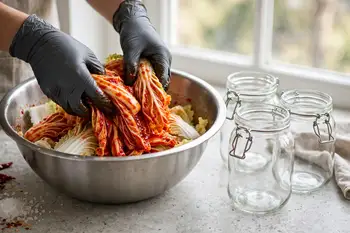 Work the paste through the cabbage, leaf by leaf, wearing gloves, until every piece is coated and glowing red.
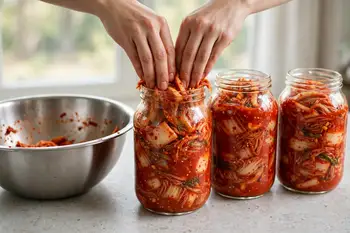 Pack tightly into clean jars, pressing out air pockets, and leave a little headspace. Ferment at cool room temperature for 1 to 2 days, until it smells tangy, then refrigerate.
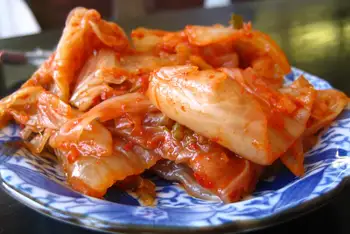 Eat fresh and crunchy now, or let it sour over weeks for stews, fried rice and pancakes.
Bury a piece of plastic wrap directly on the surface before sealing: keeping the top layer under brine is what keeps the ferment clean.