
Tahdig
Persian rice with the prize at the bottom: a shattering golden crust of saffron rice, flipped out of the pot in one piece, over fluffy, separate long grains.
The whole recipe in 60 seconds
Tahdig, in 5 ideas
- Tahdig means bottom of the pot, and in Persian cooking the crust is the honor. The cook breaks it and shares it around the table.
- Parboiling then steaming is the Persian method. The rice goes into the pot already half cooked, so the grains finish long and separate.
- Yogurt and saffron in the crust layer are the insurance policy. Tang, color and a crust that fries evenly instead of scorching.
- The towel-wrapped lid is essential. It drinks the steam that would otherwise rain back down and soften the crust.
- The flip is a moment of faith. Dry pot, hot crust, one confident turn onto the platter, and listen for the crackle.
What you need
Ingredients
- 3 cups basmati rice
- 1/4 cup fine sea salt, for the boiling water
- A large pinch of saffron threads
- 1/3 cup plain yogurt
- 1 egg yolk (optional)
- 4 tbsp butter or oil
- 2 tbsp oil, for the pot
How to make it
Method
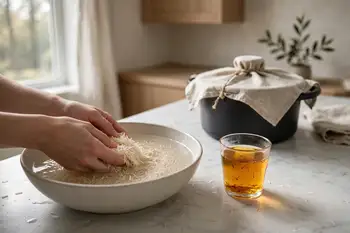 Rinse the rice until the water runs clear and soak in salted water for 30 minutes. Steep the saffron in 1/4 cup of hot water.
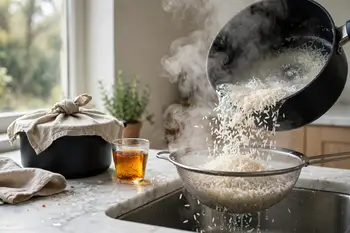 Boil the rice in well-salted water for 6 to 7 minutes, until the grains are soft at the edges with a firm core. Drain and rinse briefly.
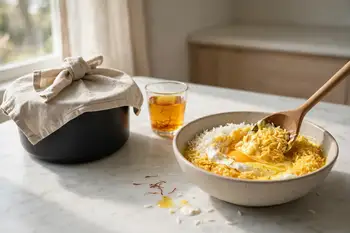 Stir 2 cups of the parboiled rice with the yogurt, egg yolk if using, and half the saffron water.
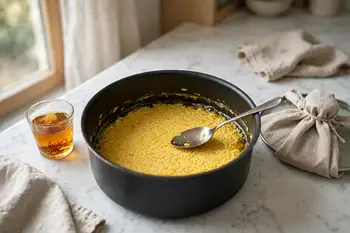 Heat the oil in a nonstick pot until hot. Spread the yogurt rice in an even layer in the bottom and press gently.
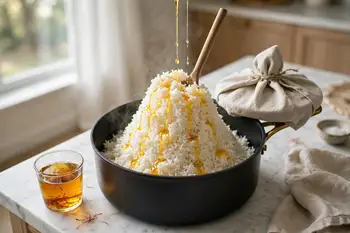 Mound the rest of the rice on top in a pyramid. Poke a few steam holes with a spoon handle and drizzle the butter and remaining saffron water over the top.
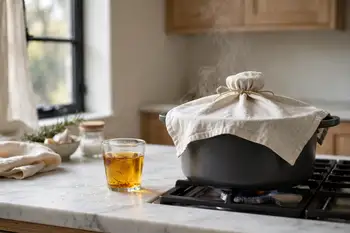 Cover with a towel-wrapped lid and cook on medium-high for 5 minutes, then the lowest heat for 45 minutes, until the crust is deep golden; you will smell it turn toasty.
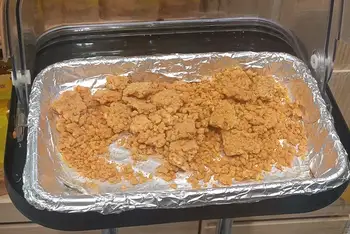 Rest 5 minutes. Loosen the edges and flip the rice onto a platter in one motion. Serve the crust in proud shards over the rice; if the crust stays behind, scrape it out and arrange it on top like the treasure it is.
A good nonstick pot is the honest cook's friend here; a well-seasoned cast iron pan works too, with an extra spoon of oil.